

Window 3 Round 1:
Accelerating Energy-Smart Solutions for Agricultural Transformation
The Green Economic Transition Facility (GETF) is designed to drive investments in green business solutions by the private sector. It finances projects undertaken in Malawi by locally registered companies or foreign-based companies willing to register and invest in Malawi.
Under Window 3, with financing support from the Royal Norwegian Embassy, the GETF is providing matching grant finance for innovative and inclusive business models proposed by the private sector to actively invest in accelerating energy-smart solutions for agricultural transformation.
The Expression of Interest (EOI) submission window for Window 3, Round 1 Opens Mar 27, 2027,19:00 CAT. Deadline is April 30, 2026, 23:59 CAT. Submissions outside this period will not be accepted.

Applicants responding to the Window 3 Round 1 Call for Expression of Interest are expected to submit green business project concepts that will accelerate energy-smart solutions for agricultural transformation. The following examples are illustrative and not exhaustive:
-
Solar-Powered Irrigation Systems: Affordable and efficient solar irrigation technologies tailored for smallholder farmers, farmer cooperatives, and agribusinesses to improve water-use efficiency and crop yields.
-
Biodigesters and Biogas Technologies: On-farm energy generation through the conversion of agricultural and animal waste into clean energy, enhancing both energy access and organic waste management.
-
Energy-Efficient Cold Storage and Processing: Low-energy or solar-powered cold chain and agro-processing solutions to reduce post-harvest losses, increase value addition, and improve food quality and shelf life.
-
Decentralized Renewable Energy Solutions: Off-grid and mini-grid renewable energy systems to power agri-processing units, irrigation schemes, and rural cooperatives in underserved areas.
-
Hybrid Energy Systems and Digital Management Tools: Integrated systems such as solar–biogas hybrids and digital platforms for real-time energy monitoring, cost optimization, and system performance tracking in agricultural enterprises.
-
Mobile or Modular Energy Units: Portable, modular, or shared energy infrastructure for use along agricultural value chains, particularly targeting last-mile connectivity, aggregation centers, and remote farming clusters.
-
Climate-Smart Logistics and Mechanization: Energy-efficient transport, storage, and mechanized solutions that reduce emissions and improve rural access to inputs, markets, and processing facilities.
-
Integrated Aquaponics and Hydroponics as an Innovative Business Solution for Sustainable Agriculture: Closed-loop systems that combine soilless cultivation with recirculating water technologies, allowing for the production of vegetables, herbs, and fish in a controlled environment that maximizes yield while minimizing resource use.
Window 3 Round 1 Eligibility Criteria
To qualify for the GETF Window 3 Round 1 Matching Grant and On-Demand Technical Assistance, the lead applicant and collaborators must prioritize sustainability and conservation while responding to the thematic areas specified for this Window. The project should aim to create jobs, improve livelihoods particularly for low-income groups and contribute to increased productivity, resilience, and sustainability within Malawi’s agricultural sector. It must promote scalable green initiatives through local partnerships, behavioral change campaigns, or innovative distribution models. Furthermore, proposals should clearly demonstrate their ability to deliver inclusive, impactful solutions that adhere to the triple-A paradigm of Affordability, Accessibility, and Acceptability among the targeted communities and contribute to the achievement of UN Sustainable Development Goals.
-
The lead organization must be a private for-profit company already operating or willing to invest in a project to be implemented in Malawi.
-
Applicants must demonstrate sound financial performance and good corporate governance.
-
Projects must address a specific environmental challenge and Accelerate Energy-Smart Solutions for Agricultural Transformation
-
Applicants must provide at least 30% of total project costs matching funds, of which up to 10% can be in kind.
-
Grant requests must be between US$40,000 and US$300,000.
-
Projects must be innovative and additional to existing business activities.
-
SMEs are defined as having between 5–100 employees.
-
Projects must align with SDGs and demonstrate inclusive impact.
-
Grants requested for the following activities will not be eligible for consideration:
• As the principal that the applicant will on-lend
• As a subsidy on interest rates or cost of service
• To act as a guarantee/collateral substitute to underwrite risk -
All applicants must provide evidence of their legal status, office address, telephone number, fax number, company registration number, tax registration and tax clearance. Applicable regulatory approvals governing project activities will need to be obtained.
All business projects must be inclusive in nature, hence, will need to demonstrate that they will be able to address specific UN sustainable development goals.
With this call for Expressions of Interest (EOI), the GETF is specifically looking forentrepreneurs to address the following:
-
Climate Impact: Solutions that reduce vulnerability to climate shocks (e.g., drought and flooding), mitigate greenhouse gas emissions, or promote adaptation through ecosystem restoration or nature-based practices.
-
Job Creation and Livelihood Improvement: Projects that prioritize job creation, especially for the bottom of the pyramid, and contribute to improved livelihoods.
-
Innovation and Technology: The use of technology, design, or business approaches that are new to Malawi or demonstrate scalable and sustainable impact.
-
Advancement of the Triple A Paradigm (Accessibility, Affordability, Acceptability): Business models that demonstrably improve access to green products and services for underserved populations by ensuring that solutions are financially affordable, physically accessible, and socially and culturally acceptable to target users, thereby accelerating adoption, market uptake, and long-term sustainability.
Focus Areas
Applicants are invited to propose commercial green business solutions that align with the following green business challenges. These examples are illustrative and not exhaustive:

Solar-Powered Irrigation Systems
Affordable and efficient solar irrigation technologies tailored for smallholder farmers, farmer cooperatives, and agribusinesses to improve water-use efficiency and crop yields.

Biodigesters and Biogas Technologies
On-farm energy generation through the conversion of agricultural and animal waste into clean energy, enhancing both energy access and organic waste management.

Energy-Efficient Cold Storage and Processing
Low-energy or solar-powered cold chain and agro-processing solutions to reduce post-harvest losses, increase value addition, and improve food quality and shelf life.

Decentralized Renewable Energy Solutions
Off-grid and mini-grid renewable energy systems to power agri-processing units, irrigation schemes, and rural cooperatives in underserved areas.
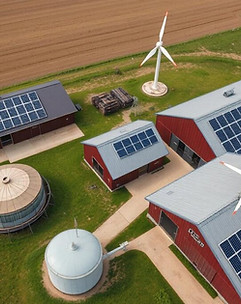
Hybrid Energy Systems and Digital Management Tools
Integrated systems such as solar–biogas hybrids and digital platforms for real-time energy monitoring, cost optimization, and system performance tracking in agricultural enterprises.

Mobile or Modular Energy Units
Portable, modular, or shared energy infrastructure for use along agricultural value chains, particularly targeting last-mile connectivity, aggregation centers, and remote farming clusters.

Climate-Smart Logistics and Mechanization
Energy-efficient transport, storage, and mechanized solutions that reduce emissions and improve rural access to inputs, markets, and processing facilities

Integrated Aquaponics and Hydroponics as an Innovative Business Solution for Sustainable Agriculture
Closed-loop systems that combine soilless cultivation with recirculating water technologies, allowing for the production of vegetables, herbs, and fish in a controlled environment that maximizes yield while minimizing resource use.
